this is the second entry!
12 entries
Journal
4:16 am: late-night notes, half-finished thoughts, and things I learned along the way.
Hello, this is from my journal.
Sweat mode: ON
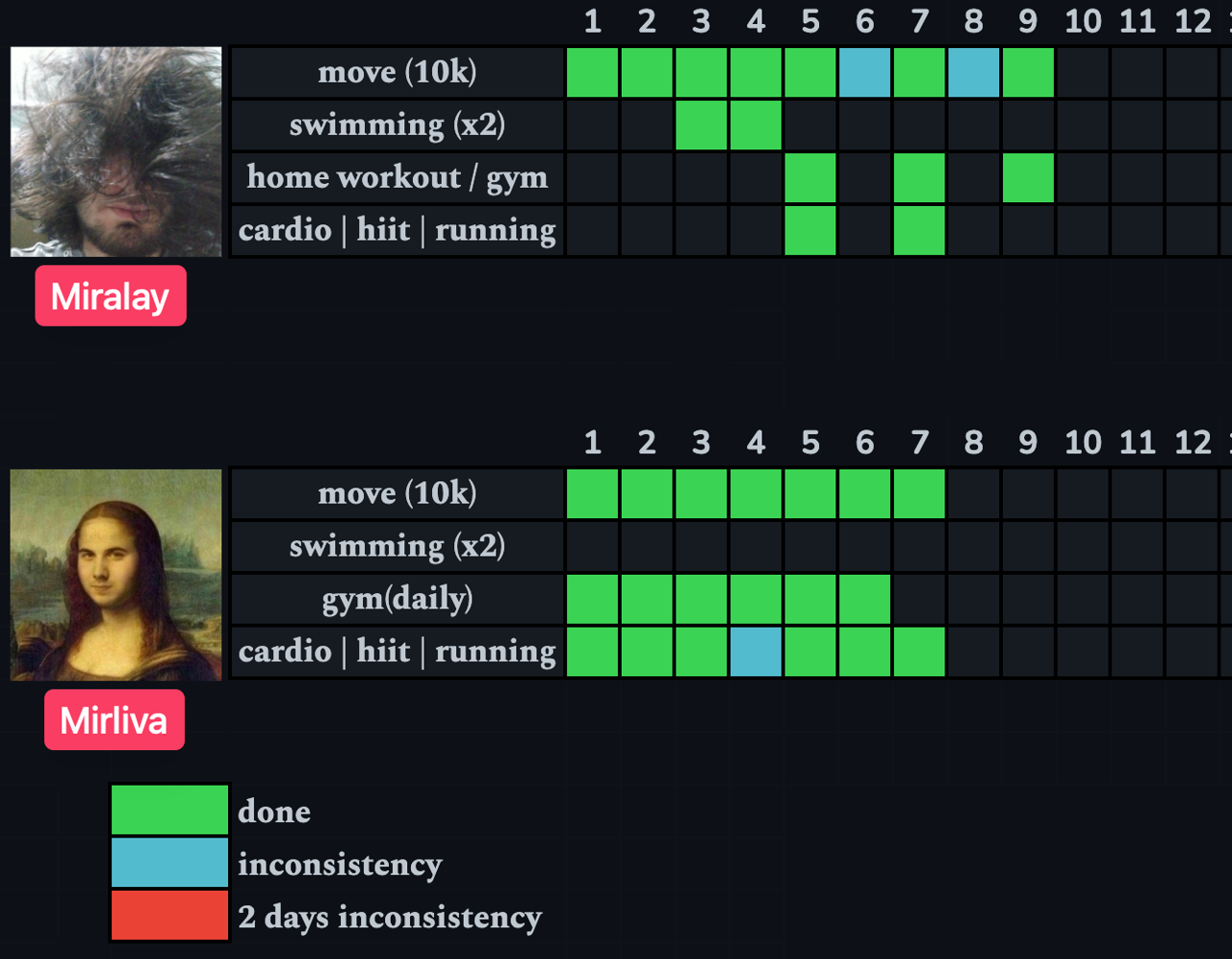
I started working out again, feeling much much much better! + I also started swimming last week.
We bet this month: whoever makes more points wins 25 bucks (1k lira).
Slight disadvantage here:
- Metin’s got an exercise bike at home.
- His gym lets him in every day.
- Mine’s just 3 days a week (budget pick 😄).
But, there's no excuses! If Mirliva wins, he'll get paid!
Back with Books (For Now)

I normally hate reading books. During all of high school, I read just a bunch of books.
Here are my favs from high school:
- How to win friends: Carnegie Mallen
- Alamut: Vladimir Bartol
- Improbable: Adam Fawer
- Robinson Crusoe: Daniel Defoe
- Shibumi: Trevanian
But somehow I ended up not liking reading books, and my relationship with them has had a lot of ups and downs!
It’s really hard to find a book that you can finish. You really need to enjoy it a lot to get through a 300-page book.
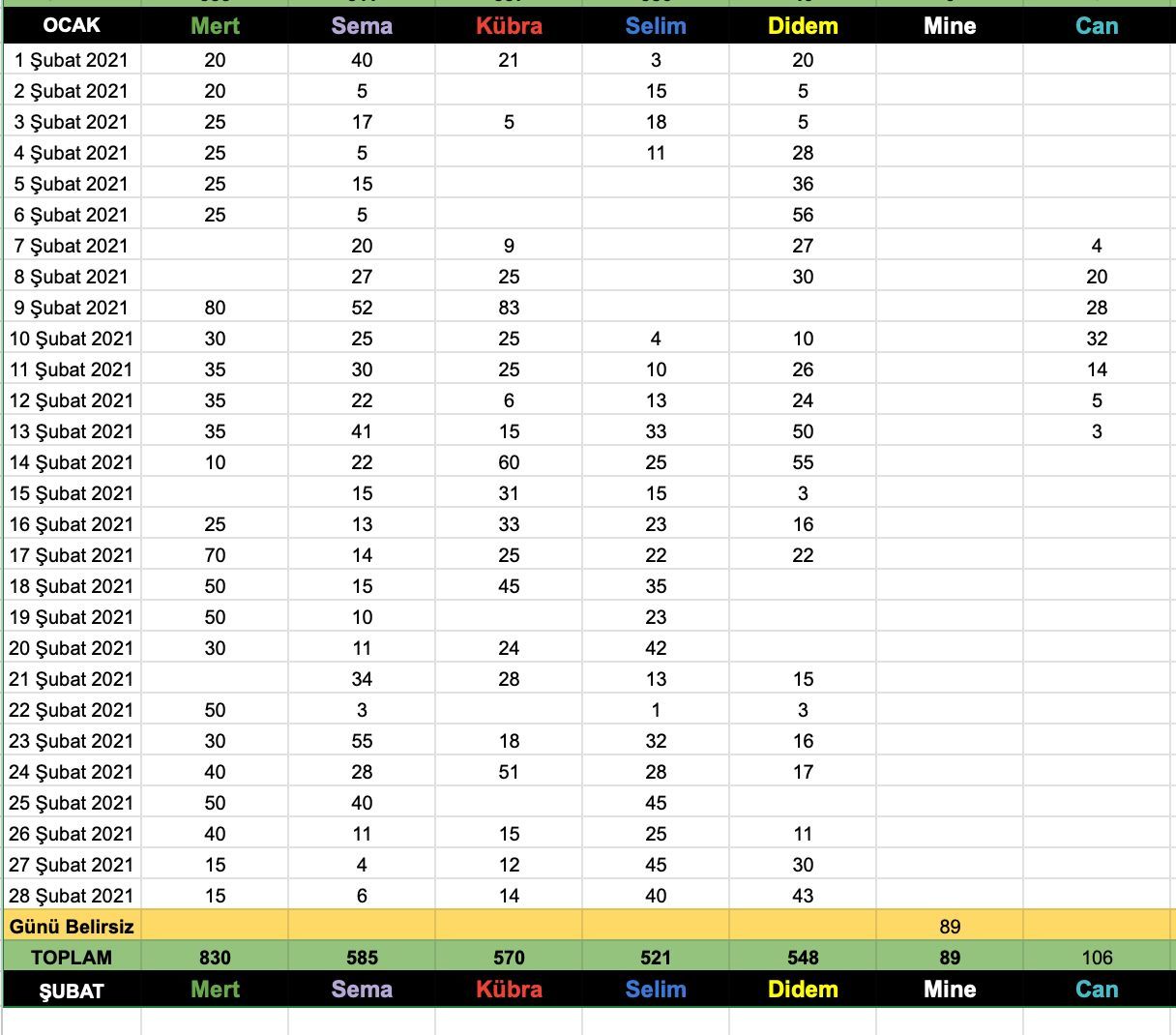
Later, at university—again, I wasn’t reading books until Corona times. We did a challenge with my friends Sema, Kübra, Selim, and Didem (who had been consistently beating me in previous months!).
After coronavirus, I again stopped reading. It wasn’t ups and downs this time, just downs :/
Building a habit both that needs your focus and boring is like really hard...
But this time I’ve got a feeling that it’s gonna last really, really long—maybe even forever (exaggerating).
Here are my university fav books;
- Outliers: Malcolm Gladwell
- Origins: Dan Brown
- 1984: George Orwell
- No More Mr. Nice Guy: Robert Glover
- Deep Work: Cal Newport
- So Good They Can't Ignore You: Cal Newport
- The Game: Neil Strauss
- The Little Prince: Antoine de Saint-Exupéry
Python new project setup!
UVVVVVVVVVVVVVVV!
I really love this project setup, everything easier with this.
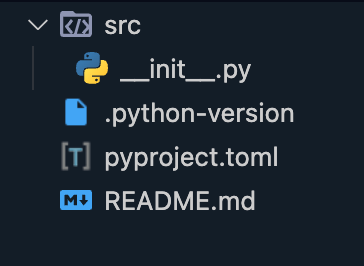
After creation of the directory, starts with uv init . --package --python 3.11
Then you gotta move the __init__.py file under the src folder.
And you will have this project directory, correctly initialized with uv!
Go to the pyproject.toml file
Change this line:
[project.scripts]
aether = "src:main" # it was project-name:main
- Add this at the end.
[tool.hatch.build.targets.wheel]
packages = ["src"]
And after all the development, you should just do uv pip install -e .
then you can run your project with uv run project-name
I also really like adding ruff: uv pip install ruff
to my precious friend! ❤️
This too shall pass
I get you!
It's tough.
Remember, you're still at the beginning of the journey.
Prioritize your health above everything.
After three years, you're going to look back at this thought and laugh!
And nobody will remember those days — only you will. So, don't compare yourself to other people.
Focus on building, and work consistently hard.
The future is really crazy — become crazy to build the future with awesome people!
Take care...
Prompt Engineering
What's prompt?
Prompt is any interaction between you and LLM (Large Language Model)
- The message you sent to ChatGPT
- Content when you send a request to LLM API
- or the text message you sent to image/music generation models.
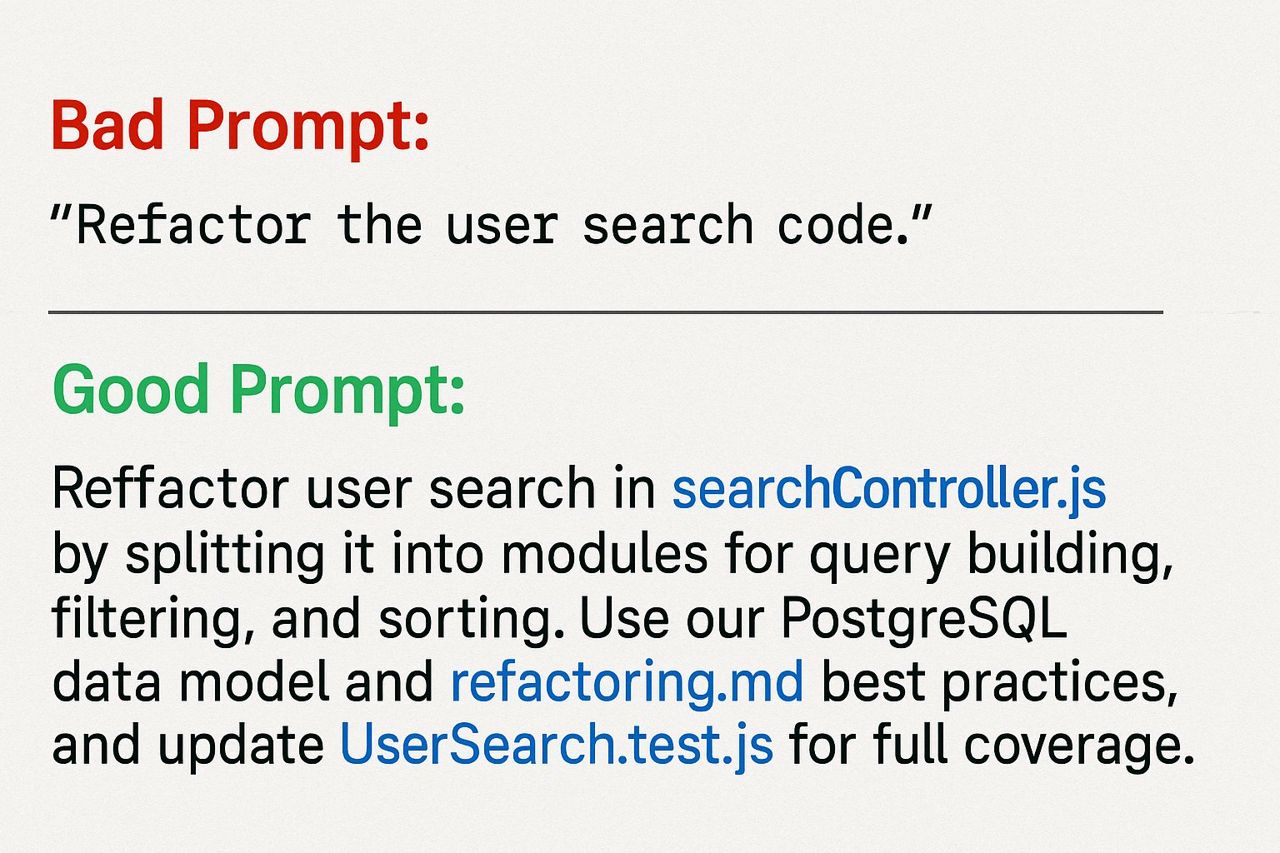
The reality is, output from LLM is as good as your prompt. That's why we need to create better prompts to get better results in any field – concise, clean and structured prompts lead to more successful outcomes.
Always clean and concise.
Just like we get better results when we clearly explain a task to an intern, we should think of AI as an intern too. (Yes, AI is a powerful tool, but when we interact with it, we need to explain it like it's 5!)
Examples and references
OpenAI discovered the same thing 5 years ago. ("Language Models are Few-Shot Learners"). There was only GPT-3 back in the time, and its performance not that good. But, prompt with examples was really common. template was Q A Q A. Nowadays probably all AI product has examples in the prompt. Write at least 1 example!
If task is hard, step by step.
Especially the problems in math or physics needs you to solve it in a step-by-step process. As we can't solve these kind of problems instantly, we can't expect AI to do so either. Plus, AI is an energy-intensive model (due to GPUs and architecture), so expecting it to solve a complex task in one go isn't realistic.
Only adding (Think step by step), improves the results. Also explaining how model should reason, like giving a direction will drive model to solve it in right way.
Role and task info
In specific topics, we need to define the role of the AI! Ex: When you give a task in law, you should say "You're a lawyer, respond based on that."
In this way, model focuses only on that topic in semantic space. This is where using system prompts can be extremely beneficial.
XML XML XML
Add XML tags whenever you add content, or any info, it's like structuring the prompt. For example, we could wrap company information in <company></company> tags or request a json-formatted response by defining a structure like {answer: <your answer>}. When you use XML tags, don't forget to explain it in the prompt, like I'm going to use <company> tags.
prefill
Some models accepts prefill for the answer. You can push the LLM to answer in your way. If you want json format, you can say start with {"answer":, and increase the accuracy + reliability.
divide and conquer an LLM!
For tasks requiring multiple prompts, such as question-generation pipelines, we often get better results by sending several prompts in sequence:
- A prompt that generates the question.
- A prompt that checks if the question is correctly formatted and gives feedback.
- A prompt that refines the question based on that feedback.
Trying to do all of this in a single prompt will cause hallucinations and errors, whereas a chained approach gives more reliable outcomes.
Leaked prompts: link
The knife and the healing hand

- You are both your greatest enemy and your closest friend.
- When asking someone a question, first share your own thoughts—then ask what they think.
- When making a decision, don’t just think about the choice—think about the consequences it brings.
- Life is an ultramarathon, not a 300-meter sprint; always think long-term.
- No one can harm you more than you can.
- You can meaningfully connect with at most 150 people—see Dunbar's Number
- Being alone doesn't mean being lonely—you’re with your best friend: yourself.
- All people will go away — your family, your loved one, your current best friends. But you'll always have yourself by your side.
- Life is a complex optimization problem. Everything is a trade-off.
- If something makes you sad, behind it there's probably you.
Magnum opus: A work of a lifetime.

Magnum opus means the greatest achievement of somebody.
In life, yes, we're doing a lot of shallow work. And we'll probably do these works in the future too. (It never ends)
But always remind yourself that you're after something big. You've a really important task. That's your magnum opus.
You need to improve yourself, broaden your vision, and expand your network. All will serve your magnum opus later. You need to develop your unique POVs.
How?
- read books
- follow high-quality people in your field.
- watch movies, especially IMDB> 8
- explore the horizontal bar in the T (t-shaped career).
- generalize early as much as you can!
- then specialize later as hard as you can
+ People always says that you're the average of the 5 people you're hanging out with the most. So, hang out with legends! (At the end of the day, you gotta become a legend to hang out with them! :) )
How do you know if you like something?
By figuring it out.
- Figure it out to build a website, and you'll find out what web development experience is.
- Build a simple stock market pricing bot, and you'll find out if you like machine learning.
- Build a simple Android application and you'll know whether you want to build apps for your whole life or not.
Yes, it's a little bit controversial to say that. You cannot find your passion or your dream job in a week. But you can understand how the web development components work.
And if you do this consistently, building consistently, I'll guarantee you'll discover your passion. By the way, you can also talk with chatgpt to learn more about yourself. Gpt can give a list of career paths that fit your personality and character. Then try to go through those holes!
If you're building in public, like sharing this journey publicly on twitter or linkedin, that's 10 times better, 'cause some people will follow your journey and it'll help you later on to find a job.
So;
- build consistently,
- build in public,
- enjoy the journey
7 techniques in genai!
This post outlines methods based on Large Language Models (LLMs), ordered from simpler to more complex approaches. While complex methods often yield better results, they require more effort to implement.
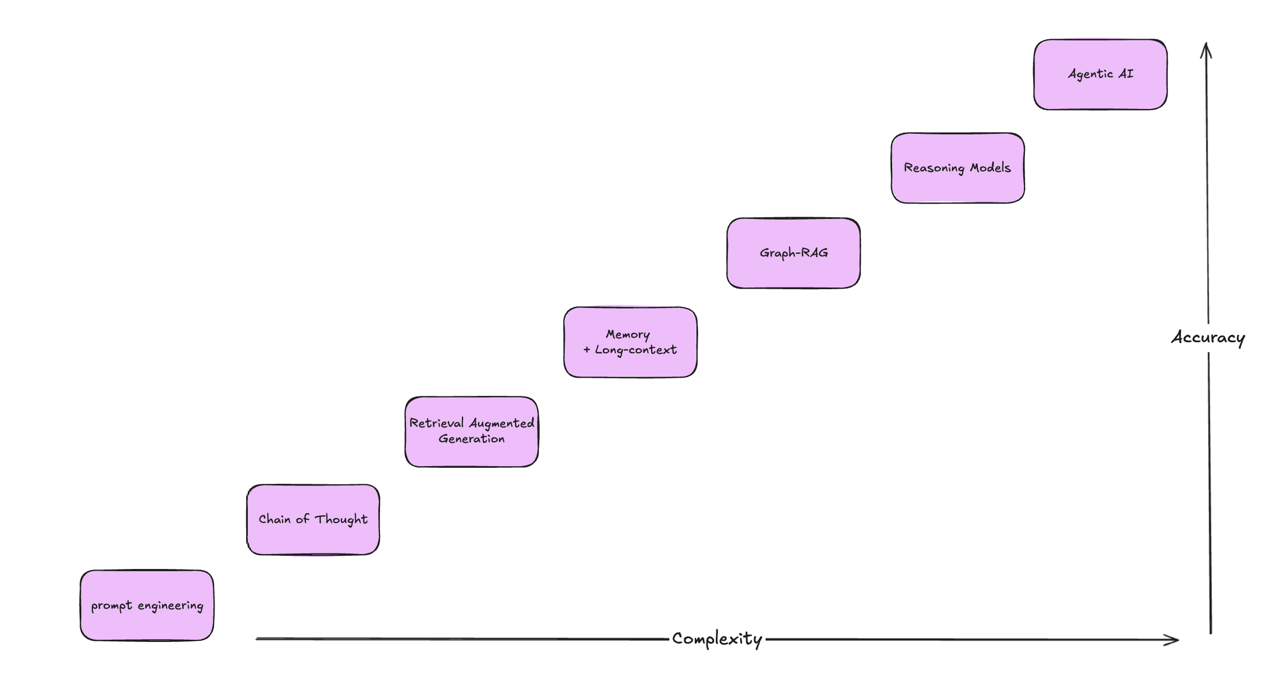
1 Prompt Engineering
2 Chain of Thought
3 Retrieval Augmented Generation (RAG)
4 Memory-Based Systems ve Long-Context LLMs
5 Graph RAG
6 Reasoning Models
7 Agents
1. Prompt Engineering
You should try it out in the first phases of the project. Even though people do not care much about prompts, better-written and structured prompts would solve your problem without needing a more complex approach. I'll share more about prompt engineering soon.
2. Chain of Thought
It is actually more like an advanced prompt engineering technique. We're giving out examples and saying the model to explain step by step. You should definitely test it out with different styles of prompts for this and other prompt engineering techniques. There's also another concept called Few-shot prompting, which is giving different query-response pairs to the models.
E.g from ARC benchmark:
{
            "id": "Mercury_7220990",
            "question": "Which factor will most likely cause a person to develop a fever?",
            "choices": {
                "text": [
                    "a leg muscle relaxing after exercise",
                    "a bacterial population in the bloodstream",
                    "several viral particles on the skin",
                    "carbohydrates being digested in the stomach",
                ],
                "label": ["A", "B", "C", "D"],
            },
            "answerKey": "B",
        },
        {
            "id": "MCAS_2007_8_5189",
            "question": "Lichens are symbiotic organisms made of green algae and fungi. What do the green algae supply to the fungi in this symbiotic relationship?",
            "choices": {
                "text": ["carbon dioxide", "food", "protection", "water"],
                "label": ["A", "B", "C", "D"],
            },
            "answerKey": "B",
        },
3. Retrieval Augmented Generation
RAG has changed how we interact with Language Models in our lives. There are prob thousands of Chat with ..(docs, pdf, github repo, etc.) applications. It's basically giving the right context to the LLM, so it can answer all of your questions based on the data it's fed. I already gave a talk at the company and built multiple rag projects.
So, I'll probably create another post to talk more about it. But, just know this, the retrieval engine should work perfectly to prevent hallucinations. Otherwise all the answers will be based on different context.
4. Memory-Based Systems ve Long-Context LLMs
We can say it's totally different from RAG, but at the same time, limited. You can feed all your data to an LLM that supports larger context windows. You can give books, documents, or anything if LLM supports that modality. Unfortunately, there aren't many models that support large context windows.
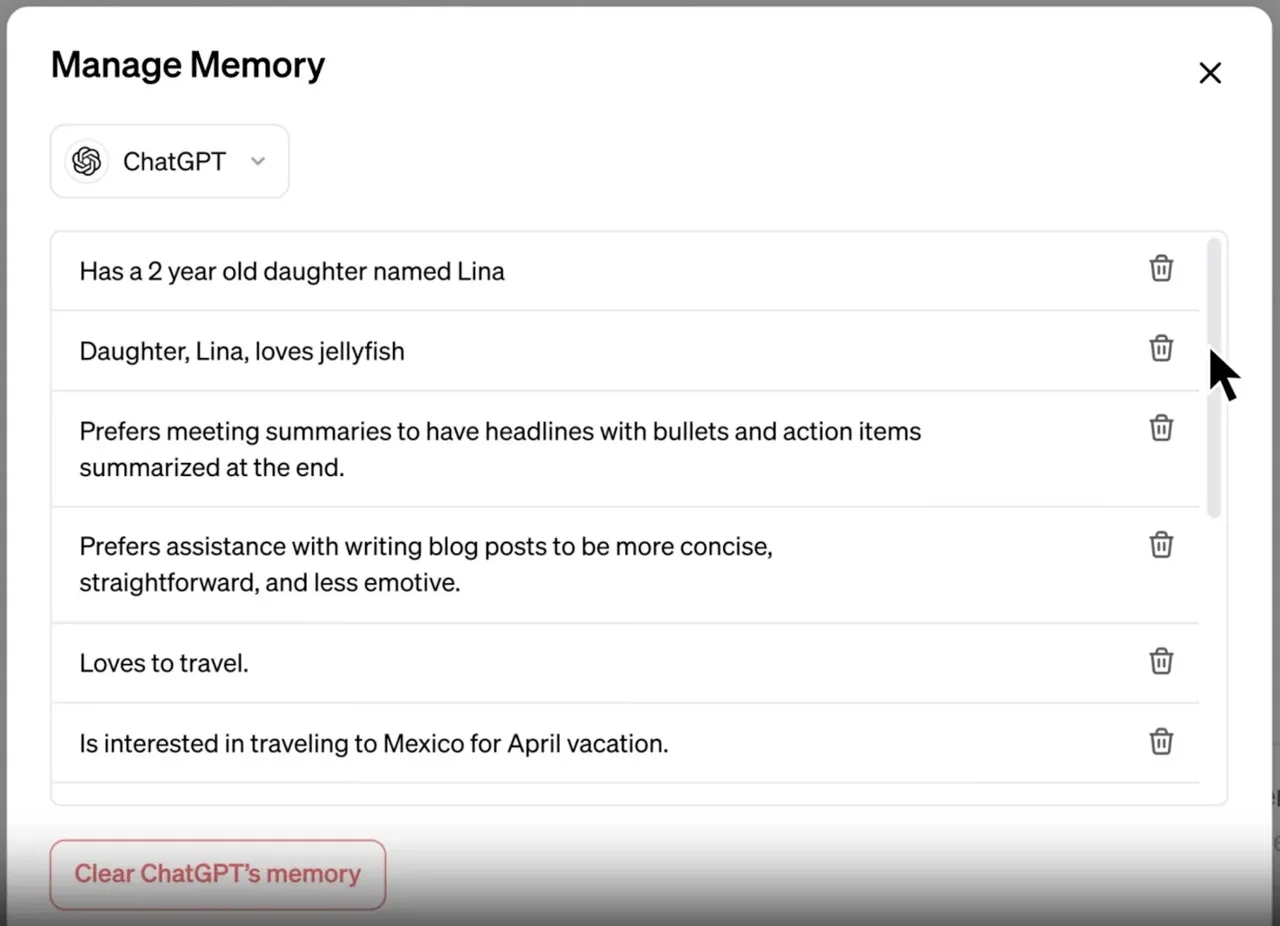
There's a technique called RoPE for larger context windows. One of the examples for this is ChatGPT. If you ask a question about a different thread, chatgpt can answer that. How?
Simple! There's a memory list, and whenever you finish a thread, ChatGPT summarizes each thread or topic discussed in the thread, + adds that summary to the memory list. And when you ask something about the past, ChatGPT goes to this memory to memorize.
5. Graph RAG
While the standard RAG works based on the embeddings and documents, Graph RAG works based on a network-like kind of structure. When you ask sth. First, it finds the most related nodes and interconnections to generate an answer. Personally, I don't believe that many use cases need Graph RAG. And it's really hard to implement. (esp. data cleaning part)
6. Reasoning Models
After explaining all those other techniques, don't forget that an LLM only tries to predict the next token. That's why sometimes they're not working perfectly. Especially in the topics that need more reasoning, they give wrong answers + say Sorry, here's the right answer.'
Reasoning models are trained with <think></think> tags and longer thinking prompts. Results in spending more GPUs to think and reason! It simulates human thinking in a computer way. :)
7. Agents
Of course, it's questionable to think that Agentic AI is always works best! Wrong, there are still a lot of security issues in MCP!
If you're really interested, read this blog from Palo Alto Networks. MCP Security Exposed: What You Need to Know Now
But it delivers impressive results. By combining different tools and planning steps, they can automate tasks easily. Agents can decide which tools to use and reflect on their decisions before taking action.
For example, turning RAG into a tool and integrating it with an agent creates what's called "Agentic RAG." While full autonomy is still challenging, in the next 1–3 years, some job roles could realistically be handled by agents. We may also see agent teams that communicate, act like employees, or even manage other agents.
I love this architecture image from Langgraph.
Check out this MCP Security framework by Google.
Lighteval
I am working on the Turkish eval integration to the lighteval.
It's fascinating to understand what's happening behind the scenes of benchmarks!
Current OpenLLMTurkishLeaderboard v0.2 is consists of 6 tasks
- gsm8k: high-quality grade school math problems
- mmlu: massive multitask language understanding
- truthful qa: measure whether a language model is truthful in generating answers to questions.
- winogrande: adversarial winograd schema challenge
- hellaswag: evaluating commonsense natural language inference
- arc: ai2 reasoning challenge
and to implement these tasks in lighteval, not that hard!
Follow Adding a Custom Task page.
You need a prompt function like this!
def prompt_fn(line, task_name: str = None):
    return Doc(
        task_name=task_name,
        query=line["question"],
        choices=[f" {c}" for c in line["choices"]],
        gold_index=line["gold"],
        instruction="",
    )
This function returns query -> your prompt, choices, and gold_index means your answer index list! (if you have multiple right answers.)
then you need a task configuration for lighteval
task = LightevalTaskConfig(
    name="myothertask",
    prompt_function=prompt_fn,  # must be defined in the file or imported from src/lighteval/tasks/tasks_prompt_formatting.py
    suite=["community"],
    hf_repo="",
    hf_subset="default",
    hf_avail_splits=[],
    evaluation_splits=[],
    few_shots_split=None,
    few_shots_select=None,
    metric=[],  # select your metric in Metrics
)
Then you need to add your task to the TASKS_TABLE list.
After getting these steps done for every tasks. You need to run evaluate command!
lighteval accelerate \
    "model_name=HuggingFaceH4/zephyr-7b-beta" \
    "community|{custom_task}|0|0" \
    --custom-tasks {path_to_your_custom_task_file}
Ta-daa! 🎉
I've already created an issue in lighteval, soon I'll create a pull-request for this contribution.